Chesapeake Community Modeling Program
the new CCMP Newsletter | December 2008
Volume 1, Issue 5
Introduction: Discussing the Vision for the future Chesapeake modeling suite
 As announced in our previous Newsletter (link to October Newsletter), we are starting a broad discussion of ideas and architectures for future modeling tools for the Chesapeake
We have now proposed a special session at the CRC Regional Conference on Ecosystem Based Management (EBM): the Chesapeake Basin and Other Systems (Baltimore Marriott Hotel and Conference Center, March 22-25, 2009). This will be our opportunity to meet in person with developers, modelers, model users and decision makers to engage in a dialogue about the functionality and design of the future CMS. Please watch for more updates on the conference web site.

Contents
1. CCMP NEws in brief
2. News from other communities
3. Open Source on the March
4. Featured Modeler: Bill Ball
5. Featured Model: SPARROW
1. Dave Jasinski Joins CCMP Team
The CCMP was very fortunate to hire Dave Jasinski as a technical assistant. Dave brings experience in GIS, statistics, web development, and science communication. After his graduate work at the UMCES, Chesapeake Biological Laboratory in Solomons, MD, he worked as a Data Analyst with the Chesapeake Bay Program. He currently resides in Gloucester Point, VA. Dave will assist CCMP and CRC in general with web updates and revisions, and provide IT, GIS and data analysis support. If you have any questions for Dave, drop him a line.
2. News From Other Communities
New Community Program Launched
Our family of Community Programs has been joined by yet another member: The Integrated Modeling for Environment Community. The name is not finalized yet, but IM4E (pronounced "I am for E") sounds too good to be ignored. The community developed from a workshop on "Collaborative Approaches to Integrated Modeling: Better Integration for Better Decision Making", which took place in Phoenix on December 10-12, and was sponsored by the US EPA. The workshop focused on several efforts in integrated modeling currently pursued by EPA (Framework for Risk Analysis of Multi-Media Environmental Systems - FRAMES), USDA (the Object Modeling System - OMS), the European Union (OpenMI), as well as such collaborative programs as the Community Sediment-Transport Modeling System (CSTMS) at USGS, MapWindow at Idaho State, our CCMP, and others.
What is quite distinct from other existing programs and what makes this program particularly promising is that it tries to be open and transparent from its inception. It was agreed that none of the Federal agencies or universities will have prime "ownership" of the program and no decisions will be made in any committees behind closed doors. At this time, there is a Google Group which is to be the site to advance the community. Consider joining the Group if integrated modeling is something you are interested in and wish to help advance.
3. Open Source on the March
Google Chrome
Google has released a new web browser, ‘Chrome’. The software is designed to more rapidly browse the Web and make running applications easier without downloading software to a computer. The product is offered on an open-source basis. Chromium is the open-source project behind Google Chrome. Google released a first look at Chromium and invites you to join their effort to:
- Help build a safer, faster, and more stable way for all Internet users to experience the web
- Create a powerful platform for developing a new generation of web applications
Please vist the Google Chrome website for more information.
From the open source perspective, however, this is an example of "branching", when a similar open source effort is launched to compete with an already existing capacity. Mozilla’s CEO, John Lilly, suggests that ties with Google became 'complicated' since Chrome. Mozilla, however, is in a unique situation among browser builders in that the bulk of its revenue -- 88%, or about $60 million in 2007, -- comes from Google. Google pays Mozilla for assigning its search engine the default in Firefox, and for click-throughs on ads placed on the ensuing search results pages. Lilly said Mozilla will compete with any and all comers. "We collaborate with Google, we talk to them, and we have a fine and reasonable relationship," he said. "But we'll compete. This is, after all, user driven."
It's really interesting, i.e., what does "compete" mean if source code for both products is going to be open and available?
While we are certainly thrilled with all the new opportunities that the power behind Google can bring to web browsing, there is still a sinking feeling about the growing dominance of the company in all aspects of information handling. However, the release of Chromium under the BSD license is quite promising. This license actually has fewer restrictions compared to other free software licenses such as the GNU General Public License or even the default restrictions provided by copyright, putting it relatively closer to the public domain.
How can "Open Source" help with school testing
Education Week published an article by Charles Barone, who suggests that the ‘No Child Left Behind Act’ can be fixed if the open source approach is applied. The major problem with the Act is that no one is happy with the tests currently used by states to measure student achievement. Barone noted that one way "to address the concerns of both the national-test and local-measures proponents...is to create a national databank of 'locally' developed test items, an 'open source' testing system." Under such a system, a group of experts would "create a pool of test items that would be piloted and subjected to the usual analyses of psychometric rigor.”
The goal would be to move beyond multiple-choice items to short-answer, problem-solving, essay, and other formats. The author lists a number of advantages of such a system:
- It would not be a government-imposed program (though it could be subsidized in part by federal or state grants).
- It would be low-cost to states (that is for local participants).
- It would get around the testing-company monopoly, which many observers feel stifles creativity and innovation, or at the very least makes it financially prohibitive.
- It would move the country toward a consensus on what should be assessed by promoting buy-in from a range of educational stakeholders.
- It would allow a great deal of flexibility. Not all states would have to use the same test. They could select subsets of items as they choose. The hope would be that a core set could be agreed upon, however, which would allow comparisons between states. This could be done nationally or, if agreement could not be reached at that level, regionally.
- It would answer the “homegrown” argument used by those who want a system of local tests, but would maintain comparability across states and districts, which would not be possible if every locality went on its own.
These seem to apply well to other open source applications, which can integrate knowledge from a wide variety of potential users, and combine local knowledge and distributed efforts with centralized supervision and quality control.
4. Featured Modeler: Bill Ball
Bill Ball, JHU [homepage]
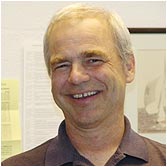 William Ball is a professional environmental engineer with research and teaching interests primarily in the area of physical/chemical processes. He received his BS degree (1976) from the University of Virginia and his MS (1977) and PhD (1990) degrees from Stanford University. He has been at Johns Hopkins University since 1992, where he is now a Professor at the Department of Geography and Environmental Engineering.
Bill's research interests and on-going projects are in various areas of environmental engineering, with emphasis on physical and chemical processes affecting water quality. He is spearheading a research project that seeks to develop better cyber-enabled approaches for interpolating water quality observations in the Chesapeake Bay and he is serving as PI and co-Director of a multi-investigator NSF project to develop a prototypical "Chesapeake Bay Environmental Observatory") that involves several other prominent Bay region modelers and scientists (Dominic DiToro, Michael Kemp, Laura Murray, Ben Cuker, Michael Piasecki, Alexey Voinov) as well as computer scientists at JHU (Randal Burns) and elsewhere (IIlya Zaslavsky, San Diego Supercomputer Center). Bill is also co-PI on a second NSF-supported Chesapeake Bay project (led by Michael Piasecki at Drexel University) entitled ""Collaborative Research: CUAHSI/CLEANER Project for Demonstration and Development of a Test-Bed Digital Observatory for the Susquehanna River Basin and Chesapeake Bay." Bill grew up sailing and swimming in the Chesapeake Bay and he frequently reminds his colleagues of how delighted he is to re-discover his original motivation for becoming an environmental engineer -- namely, to help "Save the Bay." Meanwhile, however, Bill also continues with other research related to modeling the physical/chemical aspects of water quality and treatment. This includes several projects aimed at better understanding the potential environmental impact and fate of carbon-based nanomaterials in aquatic systems, with focus on multi-walled carbon nanotubes (currently funded through the NSF and the U.S EPA). He and students are also conducting research on uranium diffusion in water-saturated porous media. This work ties in to a long history of experimental and modeling contributions in the area of contaminant sorption and mass transfer in sediment/water systems.
His other major focus area is in the development and application of appropriate and sustainable technologies for developing nations. He is the Faculty Advisor to JHU Chapters of Engineers Without Borders and Engineers for a Sustainable World.
He is involved in projects in South Africa and other places.
Bill was an avid small-boat racing sailor in his youth and enjoys cruising the waters of the Chesapeake whenever he gets the chance. His long-standing connection to the Bay invigorates his support of the CCMP efforts, for which he currentlyserves as an active member of our Steering Committee.
5. Featured Model: SPARROW
Our featured model in this issue of the newsletter is: SPARROW
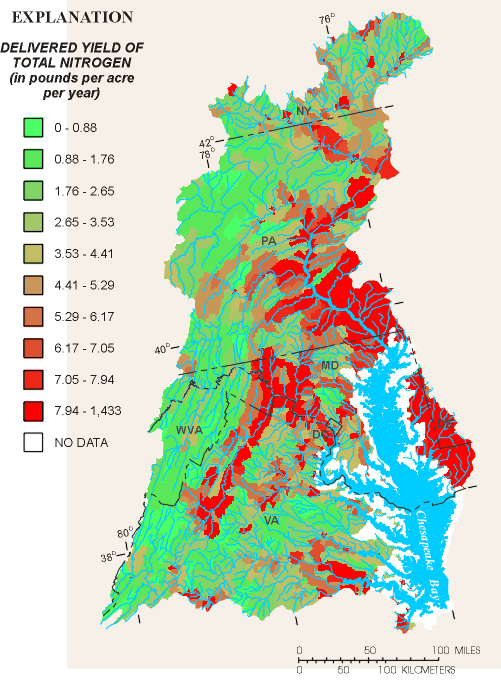
SPAtially Referenced Regressions On Watershed Attributes
SPARROW was developed by USGS and relates in-stream water-quality measurements to spatially referenced characteristics of watersheds, including contaminant sources and factors influencing terrestrial and stream transport.
The model empirically estimates the origin and fate of contaminants in streams, and quantifies uncertainties in these estimates based on model coefficient error and unexplained variability in the observed data. In calibrating the model, measured rates of contaminant transport are regressed on predicted transport rates at the locations of the monitoring stations, giving rise to a set of estimated linear and non-linear coefficients from the predictor formulae.
The mathematical form of the SPARROW model is a non-linear regression model in which source data are weighted by estimates of loss due to land-surface and instream processes. Stream-load estimates from throughout the watershed represent the "dependent" variables that are used for model calibration.
Once calibrated, a variety of regional characterizations of water-quality conditions are possible based on statistical summaries of reach-level estimates. The application of bootstrap techniques allows estimation of the uncertainty of model coefficients and predictions.
The model has been applied across the United States, with some major applications for the Chesapeake. There is also a locally calibrated version of SPARROW for the Chesapeake developed by Stephen D. Preston and John W. Brakebill.
An important difference between the Chesapeake Bay SPARROW models and the CBP HSPF model is that HSPF is spatially and temporally variable, whereas SPARROW is only spatially variable. HSPF provides load predictions for a limited number of locations over a specific time period and can be used for temporal trend evaluation. SPARROW provides load predictions for many more locations but only for one time period, typically one year. In this manner, SPARROW provides detailed spatial information that represents a "snapshot" in time. As such, a time period must be selected for the application of SPARROW and all data sets must be defined for that time period. SPARROW can be applied for evaluating temporal changes; however, a separate model must be developed for each point in time.
While the SPARROW model is open source, its execution requires SAS (Statistical Analysis System Institute) software components, which are proprietary. That combination prevents further linkage of SPARROW into other models and tools. The SPARROW model code is written in SAS Macro Language, with statistical procedures written in the SAS Integrated Modeling Language - IML. A basic knowledge of the Base SAS software is required to develop simple SPARROW models. It would be useful to the larger community if there was an entirely open source version of SAS, perhaps using some open source statistical software such as R. However, this implementation is still waiting for its developers.
Chesapeake Community Model Program
http://ches.communitymodeling.org/
Chesapeake Research Consortium
Edgewater, MD
410-798-1283